


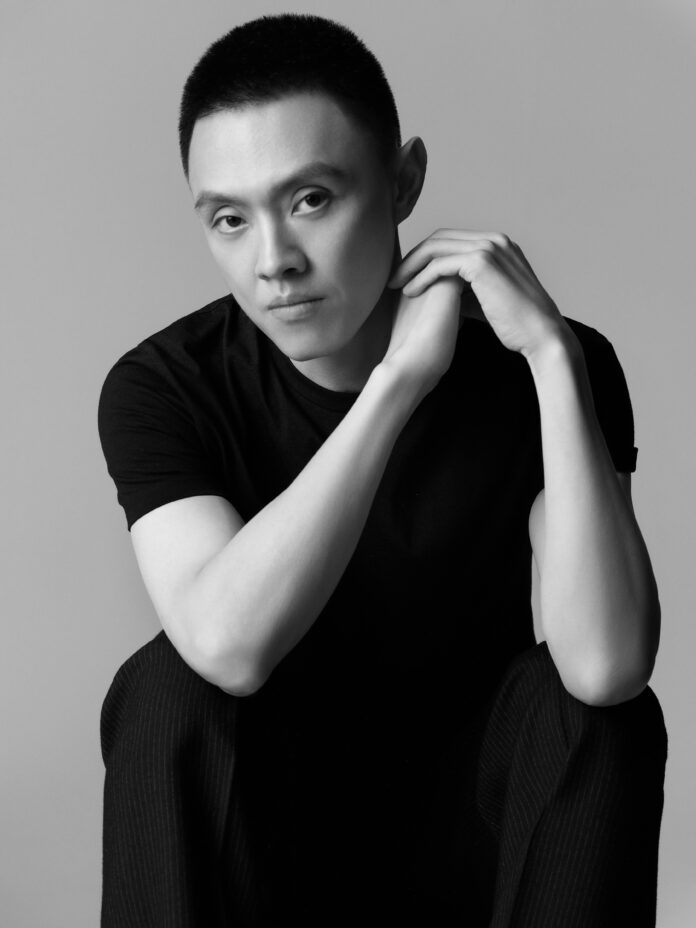
ZHANGYE is one of China’s top rising EDM stars who has a goal to ensure that not only he achieves great heights in the global EDM industry, but also wants the same for fellow Chinese DJs/producers as well. As an alumnus at the prestigious Moscow Tchaikovsky Observatory, ZHANGYE got his start as a DJ/producer in 2022 and since then, his phenomenal talents are getting stronger each day, week, month, and year. Earlier last month, he released his latest track, ‘Where Do We Go’, with Steve Aoki and Rosie Darling, a track that’s perfect for mainstage environments and it contains powerful storytelling that bridges cultures in awesome transdencence. Here is the exclusive interview with ZHANGYE as he talks about ‘Where Do We Go’, how he blends his classical music background amazingly alongside his current dance/electronic music career, his leadership as head of the Cyanhill Music record label (he is also the Founder and CEO of Cyanhill Capital), and how worldwide audiences can get to know more about the up-and-coming stars of China’s blossomig EDM industry. The international reputation of Steve Aoki is undeniable, and working with him has been an absolute pleasure. A mutual friend introduced us to each other and we immediately clicked. He is a true global superstar and pioneer whose energy and musical vision are simply unparalleled. Our collaboration transcends geographical and cultural boundaries, which is a testament to the power of music as a universal language. We shared a similar vision for the track right from the start. During the creative process, instead of merely chasing complicated genre stacking or technical flair, we made the decisive choice to look back at the golden age of Future Bass. As for Rosie Darling, her voice is the vessel for this song’s soul. She is an incredible indie-pop artist with great talent whose vocals has tons of genuine emotion and infectious quality. She perfectly captures the song’s theme of introspection and searching for direction—the core question of ‘Where Do We Go’. I am truly excited to have created this piece alongside two such exceptional musicians from different fields. This is not just a single; it feels more like an exploration—a guidance towards the infinite possibilities of music. I studied classical music at the Moscow Tchaikovsky Conservatory. Classical music and electronic music are indeed worlds apart. Classical music demands extensive study and rigorous training; to use an analogy of production, classical music operates like a “master artisan” or “craftsman,” while electronic music represents modern production methods. One can produce electronic music even without systematic, formal education. However, my classical music background is far from a past I’ve abandoned. Instead, it has become my core creative advantage: I use the logic of classical architecture to construct the world of electronic music. I am no longer restricted by the “rules” and “forms” of classical music. I have instead learned how to use the “language” of electronic music to convey the very essence—the “musical soul”—that moves people the most. This transformation makes me feel excited, incredibly energetic, and full of limitless possibilities. I have embraced the modern power of electronic music, while still carrying the meticulous spirit and craftsmanship of my classical training. I am deeply honored to be regarded as a “rising star in the Chinese electronic music scene,” but more importantly, I see my role as that of a bridge. The core significance of a project like CHINA EDM is to showcase the strength, diversity, and immense potential of Chinese electronic music to the world. We have outstanding producers who possess unique cultural perspectives and innovative production techniques. My job is simply to help build the stage—to ensure these voices get the global recognition they truly deserve. For me personally, this carries a great sense of responsibility and mission. Through my work and my label, Cyanhill Music, I aim to prove that Chinese electronic artists can not only collaborate with top international musicians but also lead trends and drive the entire industry forward. We are actively working to inject the unique sound and energy of Chinese EDM into dancefloors and radios around the globe. Roughly two decades ago, most people considered electronic music like a “niche, underground field”. We lacked professional producers, mature labels, and channels to connect with the international scene. Parties were mainly confined to underground clubs in a few cities, and the audience size was very limited. Over the past decade or so, we have witnessed an explosive growth. Large-scale music festivals sprung up, attracting top international DJs while simultaneously providing a platform for local artists. More crucially, the popularization of technology and the development of the internet allowed a younger generation of producers to have access to cutting-edge production tools and global music trends. We now possess professional labels, mature systems, and a massive fanbase. The scene has become healthier, more diverse, and incredibly vibrant. However, the pandemic dealt a significant blow to the Chinese electronic music market. The number of music festivals decreased by 90%, and the anticipated returns did not materialize. This slowdown, which actually began around 2018, caused these audiences to gradually migrate to other forms of content, although the electronic music market’s foundational audience had already been cultivated. If we set aside the impact of the pandemic on the Chinese EDM market, all previous data indicated that the domestic scene was poised for a golden age of development. But currently, the “breakthrough” of Chinese EDM into the mainstream still lacks momentum. As a synonym for “popular and avant-garde,” electronic music carries a complex cultural characteristic; it requires the support of the right atmosphere, industry infrastructure, labels, and, crucially, pioneering leaders. Why has the Netherlands become the global center of EDM, occupying such a vital position? Why are so many excellent Chinese producers rarely seen or heard on European and American stages? Beyond their earlier start, the more critical reason lies in their high-frequency internal “communication, solidarity, and mentorship.” This spirit of mutual assistance and collaboration has profoundly inspired me. China is certainly not lacking in talented EDM producers, but the question is: can we communicate and collaborate more frequently and deeply with one another to collectively expand and strengthen the Chinese EDM stage? Therefore, becoming a “connector” has become absolutely vital to me. My goal is to build a bridge between the East and the West, helping Chinese sounds and Chinese producers to stand on the international stage with greater confidence and stronger presence. Wearing the dual hats of artist and label head is indeed a challenging yet critical step in my musical journey. As an artist, my focus is solely on extreme creativity, sound, and emotional expression. However, as the head of Cyanhill Music, I must think beyond just my own work and consider the future trajectory of Chinese electronic music as a whole. For instance, how do we build a platform where talented artists are treated fairly, and their work can reach the maximum number of listeners? The most profound feeling I have is a sense of mission. Cyanhill Music is not just about releasing music; it exists to elevate and export the quality and influence of Chinese electronic music. I have a strong committment to providing truly valuable opportunities to more Chinese electronic artists and making a substantial contribution to the entire Chinese electronic music community. Our plan for the next few years is very clear: to continue leading Chinese electronic music onto the world stage. On a personal level: I will continue collaborating with top global artists and exploring a wider range of musical genres. In the future, I might attempt to delve into more directions, not strictly limited to electronic music. For Cyanhill Music: Our goal is to establish the label as the premier export platform for Chinese electronic music. We will persistently scout and nurture talented rising stars in China and provide them with an international stage. Our aim is to make “CHINA EDM” a popular choice on dancefloors worldwide. We will continue to push forward with the CHINA EDM compilation project, consistently introducing the best of Chinese electronic music to the world. Please pay close attention to the upcoming CHINA EDM Vol. 2 compilation; it represents a brand new theme. Ten years from now, I envision my identity being more diversified and deeply established. Firstly, I will still be a passionate music producer and DJ, with my work maturing to create a truly unique “ZHANGYE” genre. Secondly, I hope Cyanhill Music will evolve beyond just a label, becoming a cultural hub dedicated to cultivating and exporting Chinese musical talent, successfully pushing our artists to the global forefront. Most importantly, I hope to be recognized as one of the key figures driving Chinese electronic music to become an integral part of global mainstream culture. When I look back on this journey a decade from now, I hope to see a more prosperous and more confident Chinese electronic music industry, with myself standing on the bridge connecting the Eastern and Western music worlds, continually providing support and inspiration for the next generation of musicians.[Interview] ZHANGYE Discusses Latest Track, Career and China’s EDM Industry
When producing ‘Where Do We Go’, how does it feel for you in terms of career progression going from studying at the prestigious Moscow Tchaikovsky Observatory to showcasing your talents to the wider EDM world?
You are one of the leading voices behind the CHINA EDM Vol. 1 compilation. What do you think about being a rising star in China’s electronic music industry?
Compared to how it is today, how was the electronic music scene in China like when you first started your music career, or even when you were much younger?
How can international music fans, as well as music industry experts, get to know and learn about the up-and-coming DJ/producers in the Chinese dance/eleectronic music industry?
You are also the label head of Cyanhill Music. How does it feel for you to be the leader of a record label, in conjunction with your musical production repertoire that you still conduct?
What is next for Cyanhill Music, as well as for you specifically, in the next few years in regard to musical releases, projects, and maybe even possible event collaborations?
Which up-and-coming electronic music artists from China should the wider worldwide audience keep an eye out for?
Where do you see yourself in 10 years?
