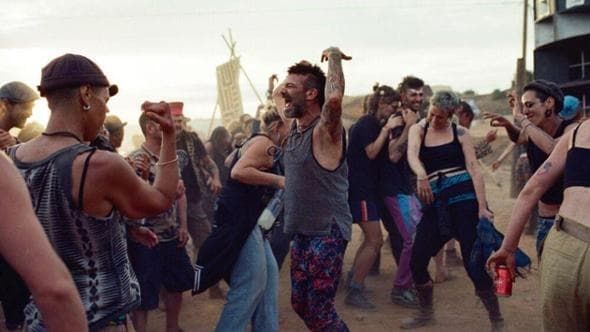
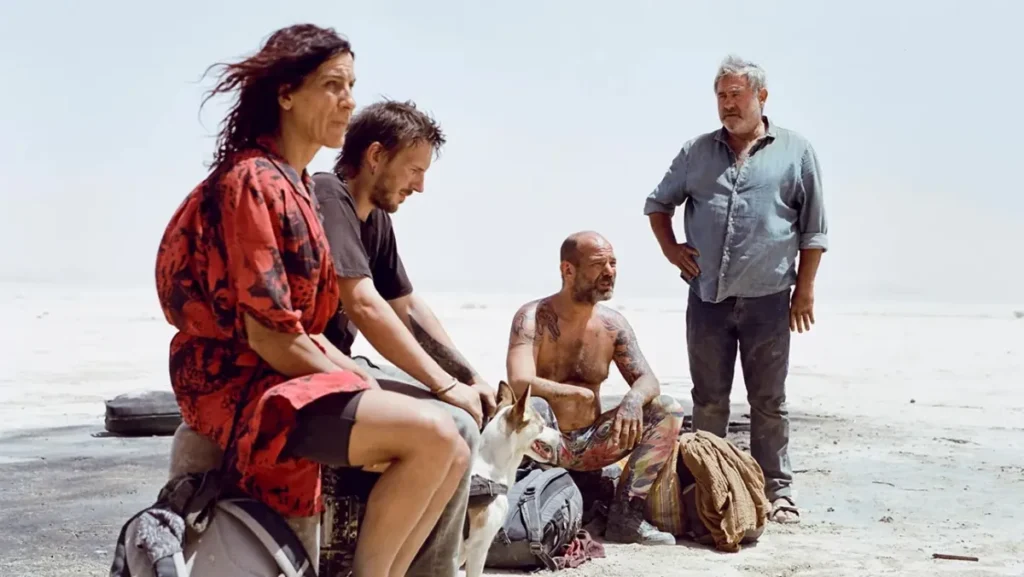
In a cinematic landscape littered with awkward, neon-soaked “club” caricatures that rarely ring true to those who actually live for the beat. Most filmmakers fail to grasp that rave culture isn’t just about the music—it’s about the sweat, the shared anonymity, and the specific, unteachable rhythm of a crowd in sync. However, the Oscar-nominated film Sirāt—a visceral exploration of identity and fringe communities—has managed to break the “cringe” curse. By ditching the polished extras of Hollywood for the raw, unfiltered presence of the real-life free party community, Sirāt real ravers are portrayed in a way that offers a rare, unflinching look at a subculture that is usually as elusive as it is misunderstood. Most “club” scenes in Hollywood feel sterile—actors pretending to enjoy music they can’t actually hear, dancing in a way that feels choreographed. Sirāt breaks that mold. This arrives with a prestigious Oscar nomination for Best International Feature, plus four other nods to its name. Sirāt weaves a tense narrative around a father and son’s desperate search for a missing girl named Mar, set against the gritty, complex backdrop of the underground rave scene. The Oscar buzz surrounding Sirāt hasn’t just been about the cinematography or the haunting score; it’s about the soul of the film. For those who live for the weekend and the heavy thump of a sound system in the middle of nowhere, one thing stood out immediately: the “extras” didn’t look like actors. They looked like family. In a move that has garnered praise from both critics and the underground community, the directors of Sirāt opted to bypass traditional casting agencies for the film’s pivotal free party scenes, choosing instead to recruit real ravers from the local scene. The heart of the film’s crowd was composed of dedicated, lifelong ravers who journeyed from all over Europe to reach the makeshift festival site. Adding even more underground credibility to the production, the decks were manned by figures like Sebastian Vaughan (aka 69db)—a legendary pioneer and key member of the iconic 1990s British free party collective, Spiral Tribe. “In film, reality is usually made to adapt to the rules of cinema. But we do the opposite: we adapt cinema to reality (…). [the ravers] told us that the music cannot stop for three days. And we were really pleased with this idea.” -Óliver Laxe, Sirāt director In a film that explores themes of identity, belonging, and the fringes of society, the free party scenes serve as the emotional heartbeat. Having an Oscar-nominated film validate this subculture—not as a caricature, but as a living, breathing entity—is a massive win for the underground. At its core, Laxe’s film unfolds as a “road movie” centered on a humble family—patriarch Luis, his son Esteban, and their dog Pipa—as they track down the missing Mar. However, their mission takes a volatile turn when radio bulletins signal the start of an armed conflict with a neighboring nation, just as the military descends to shut down the desert festival. With information and quotes from Whitney Wei for The Guardian.com Real Ravers Were Cast For Free Party Scenes in Oscar-Nominated Film Sirāt
A Search for Identity Amidst Chaos