


Spotify is exploring AI-powered “derivative” tools that could allow fans to create licensed remixes and alternate versions of songs — potentially opening a new revenue layer for artists and rightsholders. According to reporting from Music Business Worldwide, Spotify Co-CEO Gustav Söderström indicated that the company’s technology to enable fan-created derivative works is effectively ready. However, broader licensing agreements with rightsholders are still being negotiated before any large-scale rollout. The comments come as Spotify posts its strongest financial performance to date. The streaming giant ended 2025 with 290 million Premium subscribers and reported €2.5 billion in annual operating profit for the year — a milestone that underscores the company’s shift from growth-at-all-costs to sustainable profitability. During discussions about Spotify’s future roadmap, Söderström suggested that the technical infrastructure to support derivative creation already exists within the platform. While he did not announce a product launch, the remarks signal that Spotify sees opportunity in enabling fans to participate more directly in music creation — provided licensing frameworks can support it. In this context, “derivatives” refer to officially licensed alternate versions of songs, such as: Unlike unauthorized AI recreations that have sparked lawsuits across the music industry, Spotify’s concept would operate under structured agreements with rights holders. Spotify’s exploration of derivative works suggests a broader strategic evolution. Rather than positioning AI purely as a disruption, the company appears to be evaluating how it could function as a monetized layer within the existing streaming ecosystem. If structured correctly, licensed derivative tools could: However, key questions remain around ownership, royalty splits, publishing attribution, and disclosure of AI involvement. While Spotify may have the infrastructure in place, licensing remains the central challenge. Derivative works introduce complex rights considerations — especially in a climate where major labels are actively pursuing legal action against companies training AI models on copyrighted recordings without consent. Spotify’s approach appears to aim for collaboration rather than confrontation, but until formal agreements are secured, the initiative remains exploratory. The timing is significant. With €2.5 billion in annual operating profit and 290 million paying subscribers, Spotify is operating from a position of financial strength. After years of focusing on scale and user growth, the company is now exploring how to deepen monetization beyond traditional per-stream payouts. AI-powered derivatives could represent one such avenue — shifting streaming from purely consumption-based to partially participatory. Whether artists embrace that model will likely depend on transparency, opt-in control, and equitable compensation structures. For now, Spotify’s message is clear: the technology is ready. The industry just has to determine how — and whether — it wants to use it.Spotify Eyes AI ‘Derivatives’ as Potential Revenue Stream for Artists
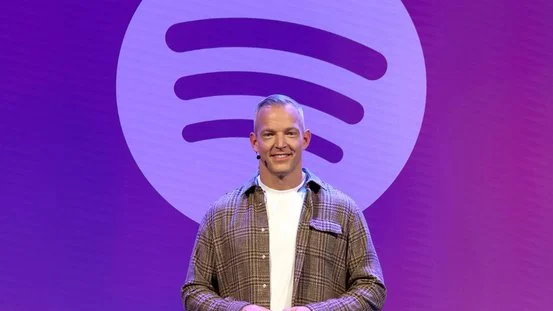
“The Technology Is There”
From Passive Listening to Participatory Creation
Licensing Is the Critical Hurdle
A Profitable Spotify Looks Ahead