


The outfit is part of the performance. It always has been, but in 2025 and 2026 the relationship between EDM artists and festival fashion has deepened into something more deliberate and more influential than ever. DJs are fronting runway shows, launching clothing lines, collaborating with luxury houses, and redefining what it means to perform in front of 50,000 people. Meanwhile, the festival crowd watching them has absorbed and amplified those visual cues — Y2K cybercore flooding the field, men taking creative liberties in crop tops and mesh, all-black techno minimalism traveling from Berlin’s underground to Coachella’s Sahara Tent. This guide covers the artists whose fashion choices have shaped festival style — from signature stage looks that have spawned entire aesthetics to brand collaborations that moved the needle on streetwear culture — along with the trend currents those looks are riding as the scene heads deeper into 2026. The genius of Marshmello’s look is its simplicity beneath the spectacle. The signature custom white helmet — a spherical LED-programmable headpiece reportedly valued around $55,000, complete with air conditioning inside — sits atop an outfit that couldn’t be more stripped back: white long-sleeve shirt, white pants, white sneakers. Everything monochrome, everything minimal, the helmet carrying the entire visual weight of the identity. REZZ (Isabelle Rezazadeh) has one of the most immediately identifiable visual identities in electronic music. The “Space Mom” look is built around a specific accessory — oversized circular LED glasses that glow and spin, a custom 3D-printed prop that creates an instantly surreal visual effect against the darkness of any stage. The rest of the look is characteristically underground: dark clothing, a hat or beanie, long black hair, the whole ensemble projecting a hypnotic, extraterrestrial cool. Peggy Gou is the most fashion-forward active EDM artist by almost any measure, and the only one in the scene who moves between DJ booth and runway front row with equal credibility. She studied at the London College of Fashion before pivoting to music, and that training shows in every outfit choice she makes. Charlotte de Witte’s fashion approach is inseparable from her music and persona. Known for dark and stripped-back acid techno, her visual identity matches perfectly — a sleek, androgynous all-black aesthetic that has become the visual shorthand for the techno underground internationally. Steve Aoki has run his Dim Mak fashion label since the mid-2010s, evolving it through multiple aesthetic eras and international presentations. The current incarnation leans heavily into anime and graphic collaborations, marking a transformative moment for anime in the fashion world. The four structural forces shaping EDM fashion right now have almost nothing to do with any individual trend or garment, and everything to do with who the scene is becoming. The erasure of the genre-look binary, the professionalization of artist fashion, the democratization of spectacle, and the gender frontier are all redefining the festival experience. The EDM festival in 2026 is one of the few cultural spaces where the full range of self-expression in dress is not just tolerated but actively encouraged.The Evolution of Festival Fashion: How EDM Artists Are Shaping Streetwear
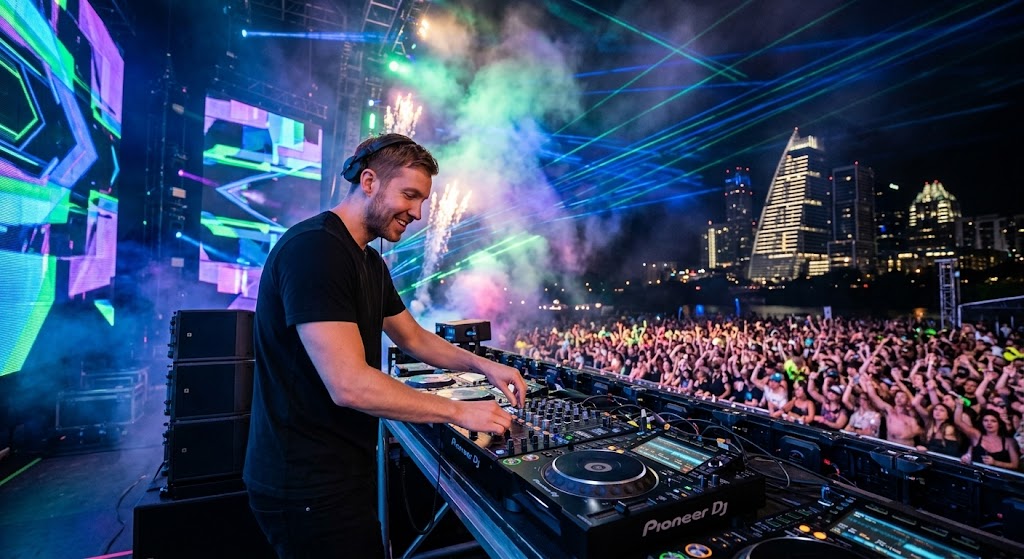
Part One: Artist Signature Looks
1. Marshmello — The $55,000 Helmet and the Power of a Monochrome
2. REZZ — Cyberpunk Space Mom and the Rise of LED Eyewear
3. Peggy Gou — Luxury Streetwear and the Berlin-to-Seoul Crossover
4. Charlotte de Witte — Techno’s All-Black Uniform, Elevated
5. Steve Aoki — Anime Streetwear and the Dim Mak Universe
Part Two: The Six Trends Defining EDM Festival Fashion in 2025–2026